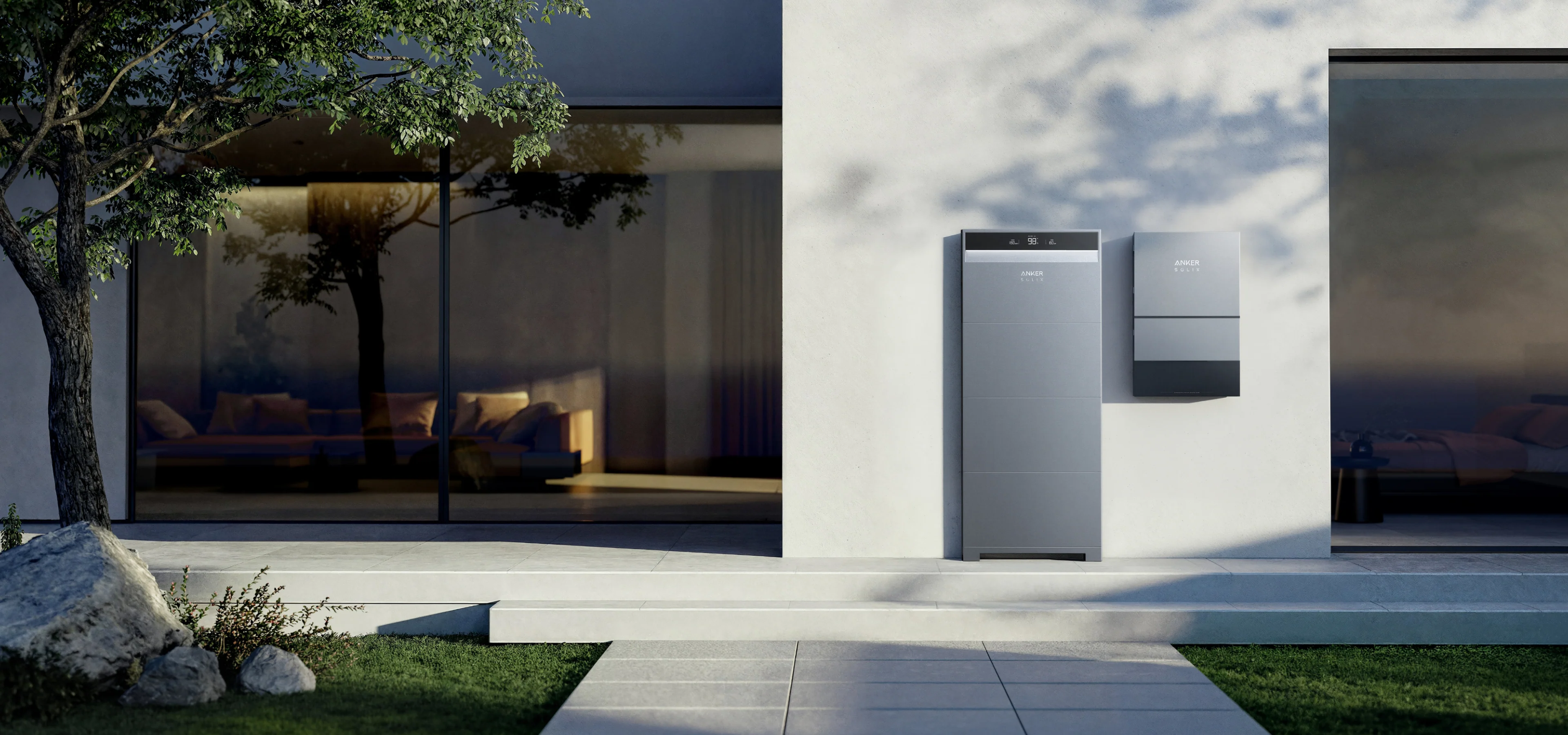
Modular, like actually.
Most "modular" batteries on the market are sold in two or three fixed capacities. The SOLIX X1 is built from a single 5 kWh LFP module — and your installer can stack as few or as many as you need. Start with 10 kWh today; bolt on another 5 kWh module in two years if you add an EV or a heat-pump hot water system. The hybrid inverter and battery management don't change.
Anker also went unusually thin. The SOLIX X1 cabinet is shallow enough to fit alongside a meter box in the kind of narrow side passage where a Powerwall 3 simply won't go — a real consideration for terrace houses and older suburban lots.
True 5 kWh modularity
Buy the capacity you need now, add modules later — no inverter swap.
Slim profile
Fits narrow Australian side passageways and garages where chunkier units can't.
Single or three-phase
5 kW single-phase or 10/12 kW three-phase hybrid inverters — covers most Australian homes.
IP65/IP66, –20°C to 55°C
C5-M corrosion rated. Outdoor install on coastal homes, no enclosure required.
The numbers, in full.
- Module capacity
- 5 kWh usable per LFP module
- Single-unit capacity
- 5 – 30 kWh (stack 1 to 6 modules)
- Parallel scaling
- Up to 6 units = 180 kWh / 72 kW (3-phase)
- Inverter — single-phase
- 5 kW hybrid (X1 Power Module)
- Inverter — three-phase
- 10 kW or 12 kW hybrid
- Battery chemistry
- Lithium iron phosphate (LiFePO₄) — cobalt-free
- Backup
- Whole-home backup (with backup gateway)
- IP rating
- IP65 (battery) / IP66 (hybrid) — outdoor rated
- Corrosion rating
- C5-M — suitable for coastal installs
- Operating temperature
- -20 °C to 55 °C
- Warranty
- 10 years · 14 MWh throughput per module
- Certification
- CEC-approved, AS/NZS 5139
The right call when…
The SOLIX X1 makes the most sense when you don't know exactly how much battery you'll want in five years — or when you'll need to start small and scale. The modular pricing means you're not paying for capacity you won't cycle.
- You want 10–15 kWh today but might add an EV / heat pump / extension later
- You're on three-phase power (10 kW or 12 kW inverter options available)
- Your install spot is narrow — terrace house, side passageway, tight garage
- You're on the coast and want a battery rated for salt-air corrosion
Where it falls short.
Single-phase output ceiling. The 5 kW single-phase hybrid inverter is lower continuous output than the Powerwall 3's 11.04 kW. For a single-phase home running ducted air-con on backup, the X1 may struggle to start the compressor cold. Three-phase homes are fine on the 10/12 kW unit.
Newer brand in Australian energy. Anker is a household name in consumer electronics but a relative newcomer to home batteries. The product is well-built and CEC-approved, but the 10-year warranty depends on Anker's local service operation maturing — something the entrenched brands have a decade head-start on.
Two-piece footprint. The X1's modular design means a separate Power Module sits on top of the battery stack — slightly taller overall than a one-piece unit at the same capacity.